
How to Check for a Manistee County Warrant
Every warrant in the county is signed by a judge or a district court magistrate. No public website posts them as one group. So the search is a chain, not a single lookup. You start with the case, then the court, then law enforcement.
The order matters. The court file often shows a warrant event before anyone calls a deputy. When the file is thin or sealed, a phone call to the right court fills the gap. A records request is the last step, and only for material the law lets the county release. Work the chain in this order.
- Search the MiCOURT case for the charge. District cases hold most bench warrants; Circuit cases hold felony warrants.
- Call the court where the case is pending. The 85th District Court is 231-723-5010, the 19th Circuit Court is 231-723-6664, and the Probate Court is 231-723-3261.
- Call the Sheriff's Office non-emergency line at 231-723-8393, or the jail at 231-723-8435, for local custody questions. Dial 911 only for an emergency.
- File a sheriff FOIA request for records that can be released. Active, sealed, and investigative warrant material is often withheld.
- Ask the Prosecutor's Office at 231-723-7518 for incident reports that carry pending charges.
- Check OTIS only after a person enters state custody. OTIS is a prison and supervision tool, not a warrant list.
- Use the county sheriff mobile app for alerts and tips. The app does not confirm an active warrant.
Note: A recalled warrant can take time to clear every system, so confirm the docket shows a recall or quash before you treat the matter as fully resolved.
Types of Warrants in Manistee County
Warrants are not all the same. Some start a criminal case. Some punish a missed date. Others let police search a place. The court that issues a warrant depends on the charge behind it. District cases cover minor offenses and traffic. Circuit cases cover felonies. Knowing the type helps you find the right file and the right phone line.
- Arrest warrant - a judge-authorized order to arrest a person, often after a criminal complaint.
- Bench warrant - issued by a judge for a failure to appear, a failure to pay, a probation problem, or contempt.
- Search warrant - governed by MCL 780.651, which lets a judge or district court magistrate approve a search when the legal test is met.
- Probation violation warrant - can arise from District Court or Circuit Court supervision.
- Child support or contempt warrant - may tie to Friend of the Court enforcement.
- Sealed warrant - may stay private until an arrest is made.
Search warrants follow one specific statute, and the text spells out how a magistrate may sign one. The Michigan Legislature posts the full search warrant issuance statute, MCL 780.651, for public review.
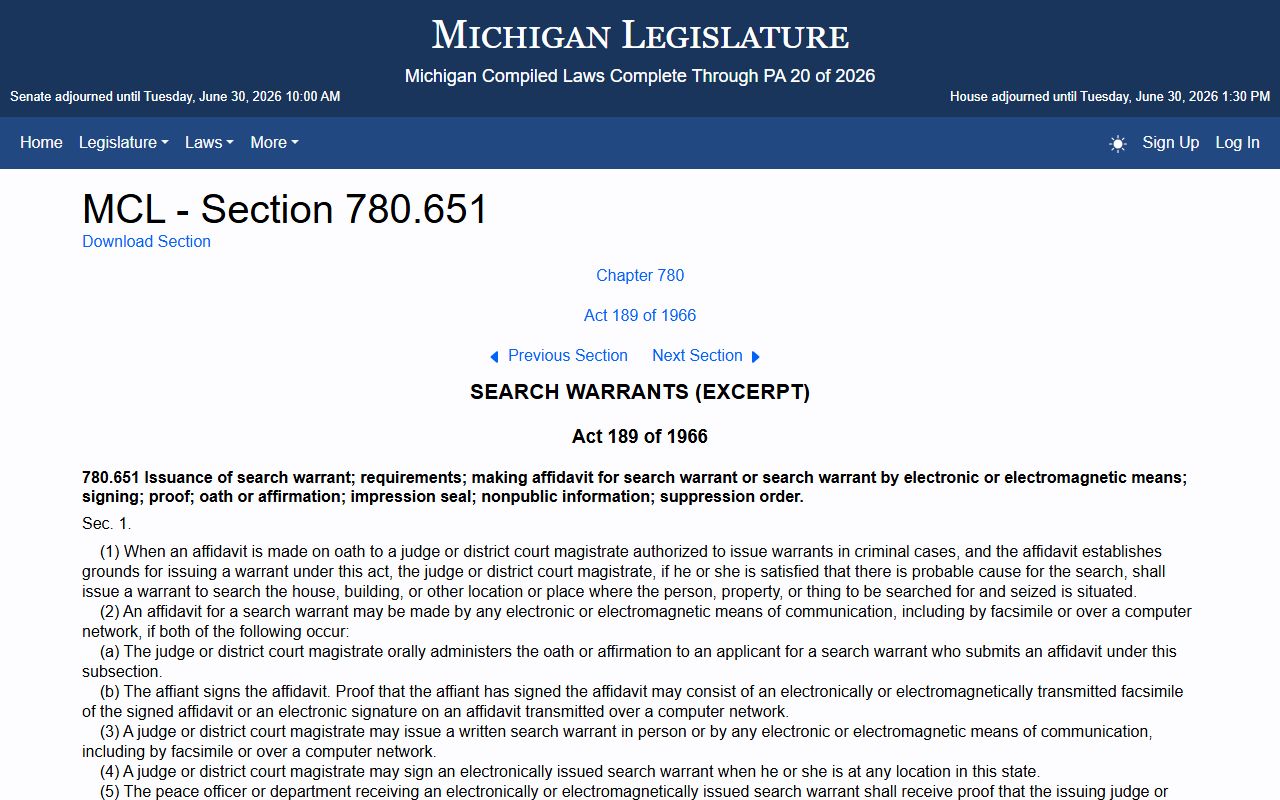
The statute confirms that a magistrate may issue the warrant in person or by electronic means, which is how many county searches are approved today.
Searching Manistee County Court Cases for a Warrant
The fastest online step is the court case itself. Manistee County uses Michigan's MiCOURT system for public case search. The 85th District Court case search sits at the D85~1 court address, and the 19th Circuit Court case search sits at C19~2. Bench warrants for missed district hearings tend to show in the district case. Felony warrants tend to show in the circuit case.
Search by case number when you have it. That path is precise and works even when a party name is suppressed. Search by name only for public case types, since juvenile and protected family matters may not return by name. For the full felony file behind a circuit warrant, including charges and sentencing, the Manistee County criminal court records carry the complete docket.
Court records are not open without limit. Michigan court rules set what the public may inspect and copy. The state posts Chapter 8 of the Michigan Court Rules, including MCR 8.119, which governs case-record access.
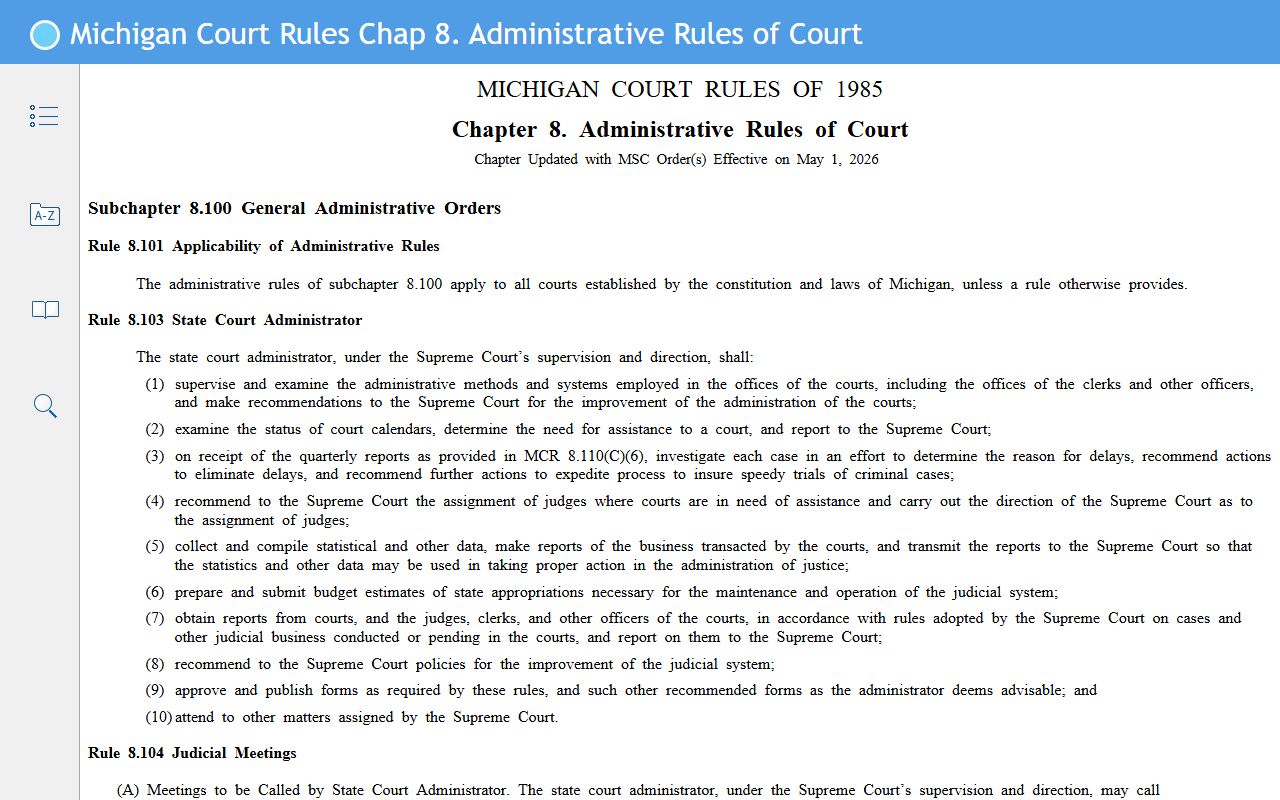
Those rules explain why some warrant entries appear in full while others show only a docket line, or nothing at all. The public portal accepts a handful of search fields, listed here for the two local courts.
| Field Label | Type | Required | Notes |
|---|---|---|---|
| Court | Dropdown / URL | Yes | Direct links preselect C19~2 for Circuit or D85~1 for District. |
| Last Name | Text | No | Used with first name to find a participant. |
| First Name | Text | No | Finds names that begin with the value entered. |
| Case Number | Text | No | The most precise path; works even when a name is suppressed. |
| Date of Birth | Date | No | Filters results, in a format such as 1980-07-07. |
| Case Status | Dropdown | No | Options include open, closed, and disposed. |
What a Manistee County Warrant Record Shows
A warrant rarely appears as a stand-alone document to the public. It shows up as an event inside a case file. When a bench warrant or arrest warrant is reflected in a public record, the file may carry these fields. Not every field appears in every case, and some are hidden by court rule.
- Case number
- Links the warrant to one specific court file.
- Court
- Shows whether the District, Circuit, or Probate Court issued it.
- Defendant or respondent name
- The person named in the order.
- Charge or allegation
- The offense or violation behind the warrant.
- Warrant or bench warrant event
- The docket line noting that a warrant issued.
- Issue date
- The day the judge signed the order.
- Bond amount and type
- The amount set for release, if any was set.
- Next hearing date
- The arraignment or review set after an arrest.
- Disposition or recall
- A later entry showing the warrant was quashed or satisfied.
- Amount due
- Failure-to-pay details on some traffic or civil infraction files.
The portal shows case data, not scanned warrant documents. For a certified copy or an older paper file, the clerk that holds the case is the source, not the online display.
Contacting Manistee County Courts and the Sheriff
When the online case does not answer the question, a call does. Match the office to the warrant type. Bench and traffic warrants sit with the District Court. Felony warrants sit with the Circuit Court. Mental health and probate contempt matters sit with the Probate Court. Local custody questions go to the Sheriff's Office or the jail.
415 Third Street
Manistee, MI 49660
Phone: 231-723-5010
Bench, traffic, and misdemeanor warrants
415 Third Street
Manistee, MI 49660
Phone: 231-723-6664
Felony warrants and higher matters
415 Third Street
Manistee, MI 49660
Phone: 231-723-3261
Mental health and probate contempt
1525 E. Parkdale Ave.
Manistee, MI 49660
Office: 231-723-8393
Jail, 24 hours: 231-723-8435
If a warrant led to an arrest, custody status is a separate search. The jail line runs around the clock, and the Manistee County inmate records page walks through the custody-lookup chain.
What to Do About an Outstanding Manistee County Warrant
An open warrant does not go away on its own. It can surface at a traffic stop, a background check, or a routine contact with police. Acting first is almost always better than waiting. The right move depends on the court and the charge, so start by learning both.
Important: Do not rely on third-party warrant sites for legal advice. Contact the issuing court or a licensed Michigan attorney before you act on or surrender for a warrant.
Once you know the court, work through the steps in order. Each one narrows the question and helps you plan a safe, informed next move.
- Identify the court from your ticket, case number, or charge.
- Ask the court whether the warrant can be recalled, whether a hearing is needed, and whether bond is set.
- For a traffic or district matter, use the court's official payment channel only if staff confirm that payment clears it.
- For a felony or circuit warrant, expect a court appearance and prosecutor involvement.
- To surrender to law enforcement, call the Sheriff's Office or jail first for procedure and safety.
- After the matter is handled, confirm the docket shows a recall, quash, or satisfaction.
Note: A quiet warrant is still enforceable, so treating a small unpaid fine or a missed hearing early keeps a minor issue from turning into an arrest.
FOIA Limits on Manistee County Warrant Records
Michigan's Freedom of Information Act gives the public a right to many government records. Warrants test the edges of that right. An active warrant, a sealed warrant, or an open investigation can be withheld to protect a case. So a FOIA request is useful for some records and blocked for others.
The Michigan Attorney General explains how the law works and how to file. Read the state overview of the Michigan Freedom of Information Act process before sending a request to a county office.
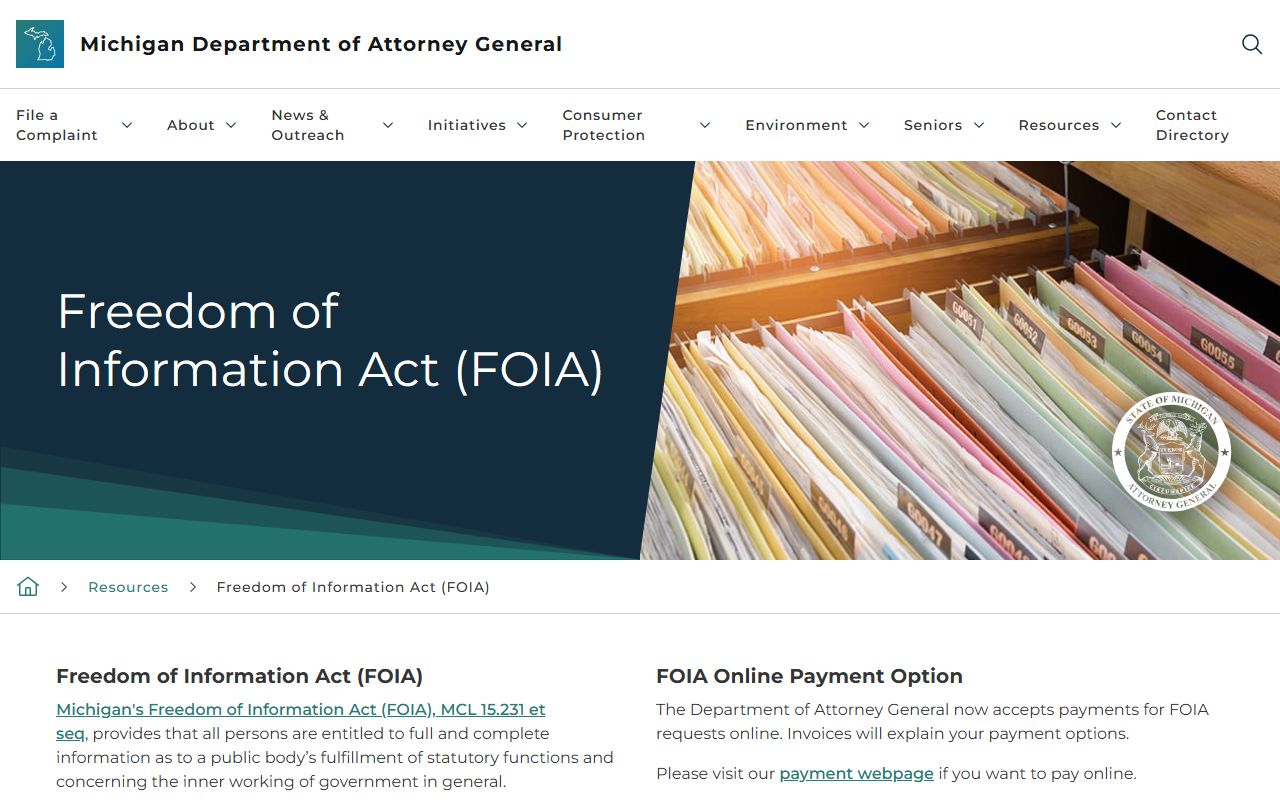
The sheriff accepts written FOIA requests by mail, in person during weekday administrative hours, or by email to the FOIA coordinator. Incident reports that carry pending charges are handled differently. The sheriff's own guidance sends those requests to the Prosecutor's Office at 231-723-7518, because releasing them early could harm a live case.
Note: Court case files are governed by court rule rather than FOIA, so warrant entries in a case are requested through the clerk, not through a sheriff FOIA form.
Sealed and Set-Aside Manistee County Warrant Records
Some warrants never reach the public at all. A sealed warrant may stay hidden until an arrest is made. Juvenile matters are open only by court order to a person with a legitimate interest. Federal warrants do not run through the county courts, so a local case search will not show them.
Access can also change after a case ends. A qualifying adult conviction may be set aside, which limits public view of the record. Michigan's set-aside law lists who may apply and how. The Legislature posts the set-aside application statute, MCL 780.621.
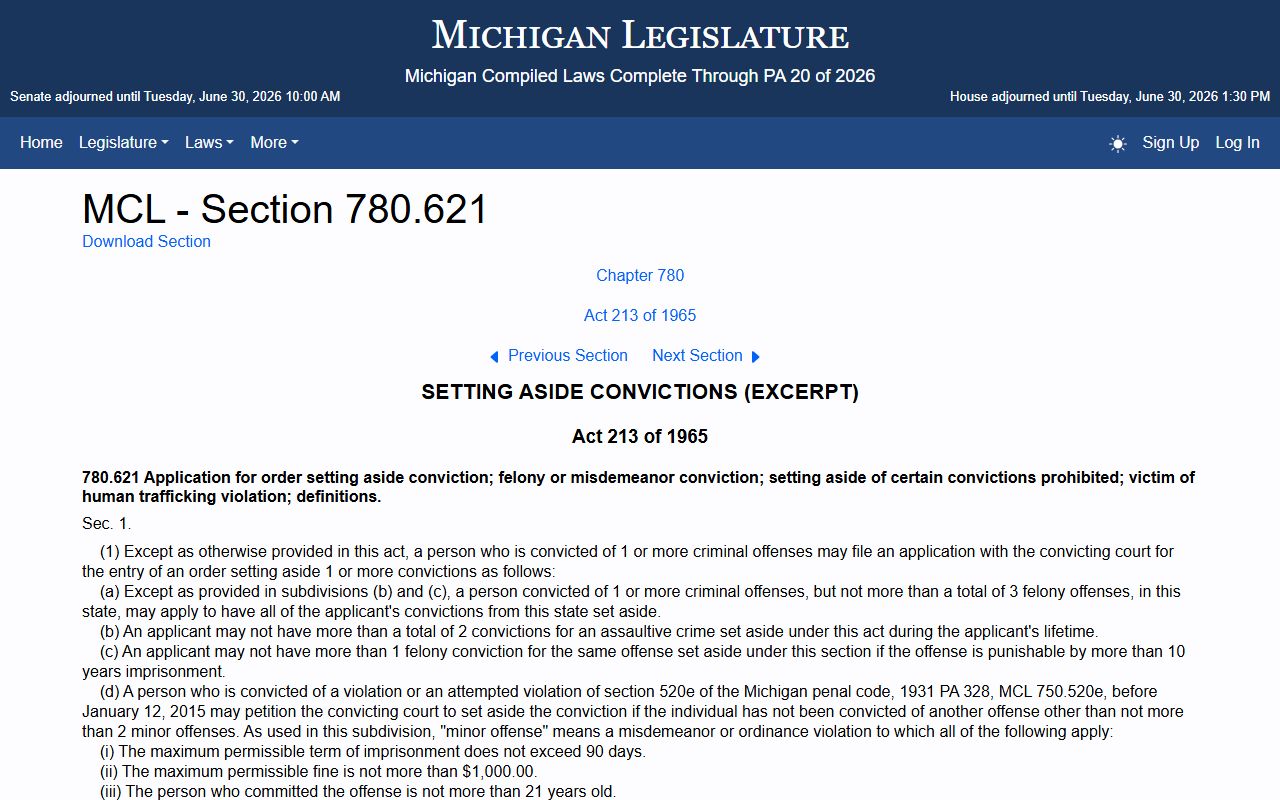
The application path checks eligibility, clears required waiting periods, and may include a court hearing. Not every conviction qualifies, and traffic records carry special limits. The exclusions appear in the companion statute.
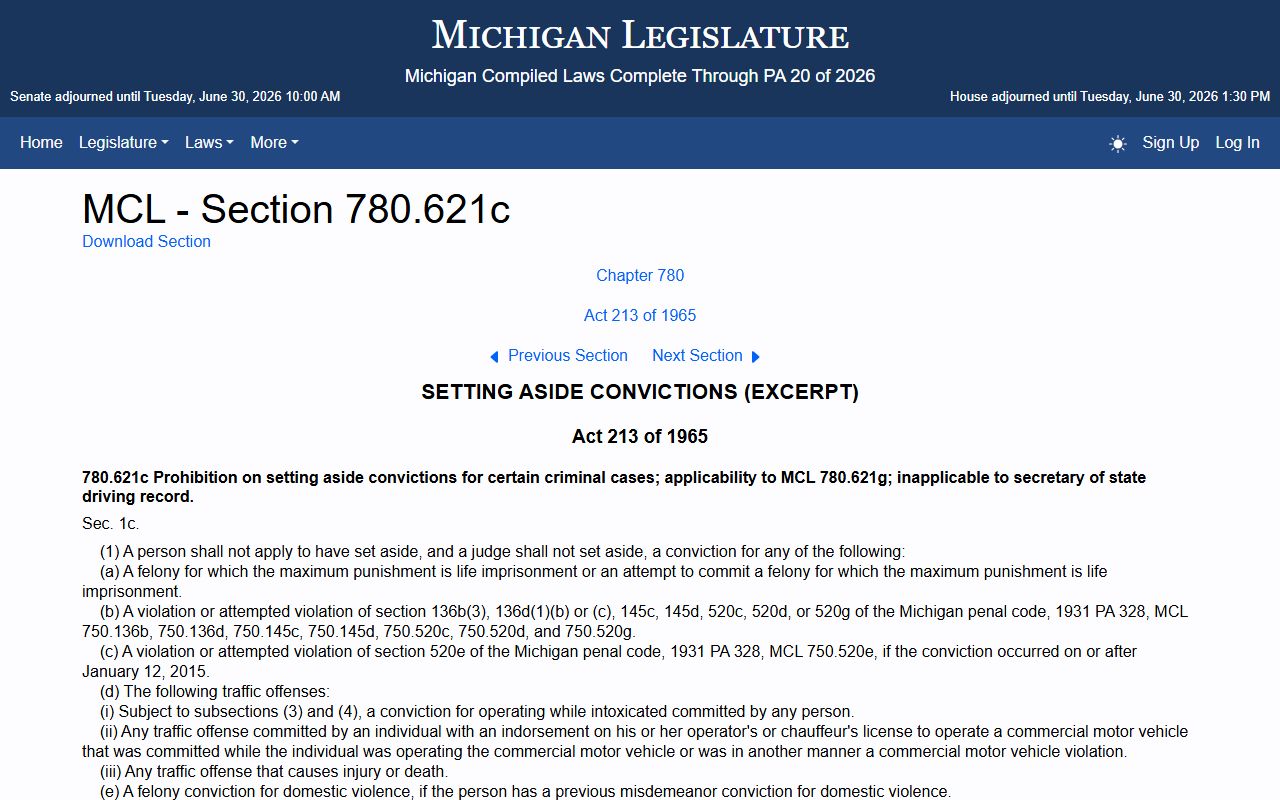
As MCL 780.621c shows, some offenses cannot be set aside, and an order does not force the Secretary of State to erase a traffic conviction from a driving record. A set-aside limits public access, but the record may still be visible for some law-enforcement, licensing, or court purposes.